
You were fingerprinted for a school job, the operator handed back your form, and now you are waiting. Nobody told you how long it takes, and your start date depends on it. This guide explains how long Live Scan results usually take in California, why some take much longer, how to check the status yourself, and what you can do if yours seems stuck.
The Short Answer
Most California Live Scan submissions are processed within a few days. The California Department of Justice has said that the majority of electronic fingerprint transactions are completed within roughly 48 to 72 hours. A meaningful minority take longer, anywhere from a couple of weeks to a month or more, usually because something needs a manual look. The results go to the agency that requested the check. They do not come to you, which is why applicants often hear nothing even after the check is finished.
What Happens After You Are Fingerprinted
Understanding the path your prints take makes the waiting easier to read.
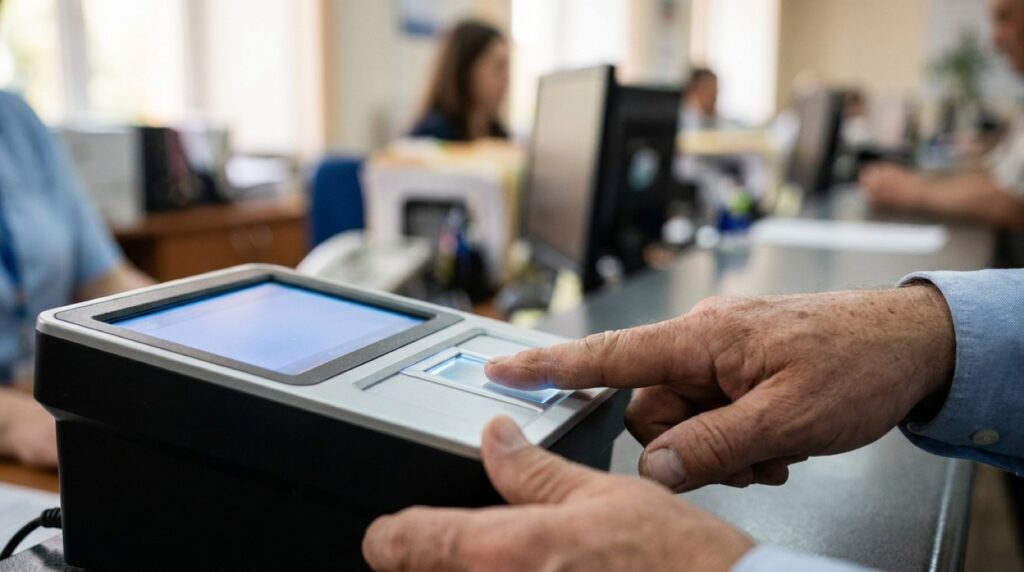
- Submission. The Live Scan operator captures your fingerprints digitally and sends them, with the information from your Request for Live Scan Service form, to the California DOJ. You get a copy of the form with an ATI number written on it. Keep it.
- State check. DOJ compares your prints against California criminal history records.
- Federal check. If the requesting agency asked for an FBI check, which is standard for school employment, DOJ forwards the prints to the FBI and waits for that response.
- Response to the agency. DOJ sends the result to the requesting agency identified by the ORI code on your form. For school jobs that is the district, county office, or authorized employer that sent you.
- Clearance decision. The employer reviews the response and decides whether you are cleared to start. For many agencies, DOJ also sends later notices if there is a new arrest while you are employed.
If the form’s codes are new to you, we explain them in what an ORI number means, and the screening as a whole in what DOJ background clearance means for school staff.
Typical Timelines
- Two to three days: clear prints, no matching record, information on the form matches. This is the most common outcome.
- One to two weeks: a busy season, or a minor delay on the federal side.
- Thirty days or more: something required manual review. This is less common, but it is not rare, and it does not by itself mean there is a problem with your background.
Late summer is the slowest time of year for school employment checks, because districts across the state are onboarding staff at once. If you can get fingerprinted in June or early July for an August start, do.
Why Some Results Take Longer
Fingerprint quality
Worn, dry, scarred, or very fine ridges produce prints the system cannot read confidently. People who work with their hands, older applicants, and people with certain skin conditions see this more often. DOJ or the FBI may reject the prints, and you will be asked to be printed again.
A possible record match
If your prints match a record, even an old one, a dismissed case, or an arrest that never led to a conviction, a technician reviews the file before a response goes out. DOJ sometimes has to contact a court or a law enforcement agency to confirm how a case ended. That step alone can add weeks.
Information that does not line up
A mistyped date of birth, a name that differs from an earlier submission, or an incorrect agency code can send a transaction into manual handling. Check every field on your form before the operator submits it.
Federal processing
The FBI portion is usually fast, but it is a separate system with its own queue. An employer may see the state result come back before the federal one.
The employer’s own step
Sometimes DOJ has finished and the delay is on the receiving end. The response sits in a secure mailbox until someone in human resources retrieves and reviews it. A polite status question to HR is reasonable after a week.
How to Check Your Live Scan Status
California DOJ runs an online Applicant Background Check Status tool. To use it you need two things:
- Your ATI number, written on your copy of the Live Scan form
- Your date of birth
The tool tells you where the transaction stands, for example that it is in progress, that it has been completed and sent to the agency, or that the prints were rejected. It will not show you the content of your record. Only the requesting agency receives that.
DOJ has asked applicants to wait at least seven days after fingerprinting before checking, because most transactions finish inside that window. If the tool shows that your result was completed and sent, contact the employer rather than DOJ. If it shows a rejection, contact the Live Scan site or the employer about being reprinted.
What “Completed” Does and Does Not Mean
A completed status means DOJ has finished its part and sent a response. It does not tell you what the response said, and it does not mean you are cleared to work. The employer still has to review it, and for school employment there are usually other items in the file, such as a TB risk assessment and employment eligibility documents. Do not report to a school site until the employer tells you that you are cleared.
If Your Prints Are Rejected
A rejection for image quality is a technical result, not a judgment about you. What usually happens next:
- You are asked to be fingerprinted again. Many Live Scan sites do not charge a second rolling fee when the first set was rejected for quality, if you return to the same site with your original form. Ask.
- If a second set is also rejected, DOJ can run a name-based check instead. That request comes from the employer, not from you, and it adds time.
To improve your chances the second time, use lotion on your hands for several days beforehand, drink water, and avoid heavy manual work or harsh cleaners right before the appointment. Ask the operator to check the quality score of each print before submitting.
What You Can Do to Avoid Delays
- Use the form your employer gives you. It carries the correct ORI, mail code, and applicant type. A form from another employer sends your results to the wrong place.
- Bring valid government photo identification that matches the name on the form.
- Proofread before submission. Name, date of birth, and Social Security number are the fields that cause trouble.
- Keep your copy of the form. The ATI number is your only handle for status checks.
- Go early. Fingerprint as soon as the employer gives you the form, not the week before you want to start.
- Tell the employer about anything on your record. If you know a check will surface something, saying so up front lets HR plan for the review time and shows good faith.
Can a Previous Live Scan Be Reused?
Generally no. California Live Scan results are specific to the agency that requested them. A check done for a previous district, a coaching position, or a different employer cannot be transferred, because each agency is only authorized to receive responses for its own applicants. Each new employer needs a new submission under its own ORI. It is frustrating, and it is how the system is designed.
How It Works When You Are Placed Through Blue Horizons
Blue Horizons is authorized as a DOJ applicant agency with its own ORI, so results for our aides come to us directly rather than passing through a third party. We receive the response, complete the review, and confirm clearance before an aide’s first day at a school. We also receive subsequent arrest notifications while an aide is on assignment. Our overview of background check compliance walks through the full screening process.
Frequently Asked Questions
Will I get a copy of my results?
Not automatically. The response goes to the requesting agency. You can request your own record from DOJ through a separate record review process, which involves its own Live Scan submission.
Does a long wait mean something is wrong?
No. Poor image quality and common names cause delays for people with no record at all. If something on your record does need review, the delay reflects DOJ confirming details, not a decision about your employment.
Can I start work while I wait?
For positions that involve contact with students, employers generally wait for clearance before a first day. Ask the employer what its policy is.
Who do I call if it has been more than 30 days?
Start with the employer’s HR office, since they can see what they have received. They can ask DOJ to follow up on a delayed transaction.
The Bottom Line
Expect a few days, plan for a couple of weeks, and do not panic at a month. Keep your form, check status with your ATI number after the first week, and stay in touch with the employer. If you are looking at aide roles in Southern California and want to know how our screening timeline works, see our careers page or get in touch.
This guide is general information, not legal advice. Processing times and procedures are set by the California Department of Justice and can change. Check the DOJ website for current guidance.