
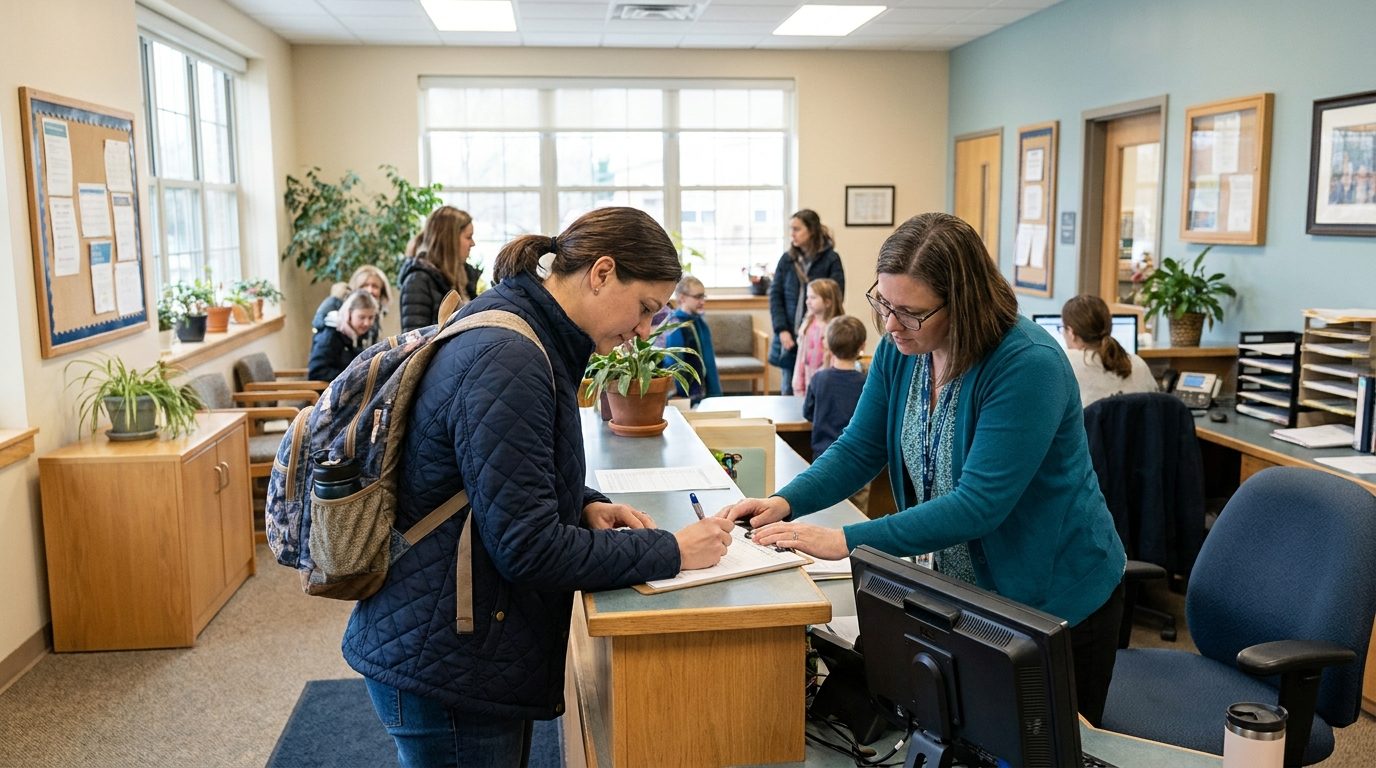
Any adult who works in or around a classroom with students has to be screened before that placement happens — that’s the baseline California districts already operate under. For special education staffing specifically, the standard administrators ask about most is DOJ (Department of Justice) Live Scan fingerprinting. Every aide Blue Horizons places completes this screening before their first day in your classroom.
This page explains what that screening involves, why it matters for a district placing staff around students with IEPs, and how we build it into every placement instead of treating it as paperwork to file after the fact. It’s a general explainer, not legal advice — your district’s own compliance requirements should always be confirmed with your legal counsel and SPED leadership team.
What DOJ Live Scan Screening Is
Live Scan is the electronic, fingerprint-based process used to submit an applicant’s fingerprints to the California DOJ (and, where applicable, the FBI) for a criminal history check. It’s the standard most people associate with “being cleared to work around kids” — a fingerprint-tied look at an individual’s criminal record, not just a name-based search.
Blue Horizons Aides is an authorized DOJ applicant agency with an assigned ORI (Originating Agency Identifier), meaning we’re authorized to submit Live Scan requests and receive results directly from the DOJ. Where legally authorized, we also receive ongoing notifications from the DOJ on the aides we place — not just a one-time result at the point of hiring.
Why This Matters More in Special Education Staffing
General classroom staffing already requires background screening. Special education staffing raises the stakes: aides working with students under IEPs are often placed one-on-one, in close physical proximity, with students who may have limited ability to report a concern themselves. A district placing an aide in that setting isn’t just meeting a general staffing requirement — it’s making a judgment call about who gets that level of access and trust, on behalf of a family who has no visibility into the vetting that happened before that person walked into the room.
That’s the exposure an administrator carries personally. If a placement goes wrong, “the vendor said they were screened” isn’t a satisfying answer to a parent, a school board, or your own conscience. You need to know the screening actually happened, to a real standard, before the aide was in front of a student — not after a complaint is filed.
How Blue Horizons Builds This Into Every Placement
- DOJ Live Scan fingerprinting and reference checks are completed before an aide is ever assigned to a classroom or student — not scheduled around a start date that’s already been promised to your district.
- Screening results are part of the file we maintain on every aide, alongside training records and supervision notes, so it’s documented and retrievable, not just something we attest to verbally.
- Clearance is one part of the Blue Horizons Standard — screening is paired with structured onboarding, multi-layer supervision, and ongoing retraining, so vetting isn’t a one-time gate an aide passes through and then is left unsupervised.
- Because attendance, timesheets, and journals are tracked in real time and roll into our Quarterly Performance Review Program, a district isn’t relying on the background check alone as the only safeguard over the course of a placement.
What This Means for Your District
When you place an aide through Blue Horizons, the DOJ Live Scan screening has already happened — it isn’t a step your office has to verify, chase down, or hold a file open waiting on. That’s the point of working with an agency built like a compliance department rather than a temp agency: the vetting is already done by the time an aide is offered to your program, which helps districts address staffing vacancies without a gap in screening standards.
Frequently Asked Questions
Do I need to request proof of DOJ Live Scan clearance separately?
Every aide we place has already completed Live Scan screening before placement. If your district’s own compliance process requires specific documentation on file, your single point of contact can walk you through what’s available — confirm your exact documentation requirements with your district’s legal or compliance team.
Does background screening happen once, or is it ongoing?
Screening happens before placement, and it sits alongside ongoing retraining and multi-layer supervision for as long as the aide is placed. Where legally authorized, Blue Horizons also receives ongoing DOJ notifications rather than relying on a single point-in-time result.
Is this page legal guidance for our district’s compliance policy?
No — this is a general explainer of what DOJ Live Scan screening means in a school-staffing context. Your district’s specific compliance obligations should always be reviewed with your own legal counsel and SPED leadership.