
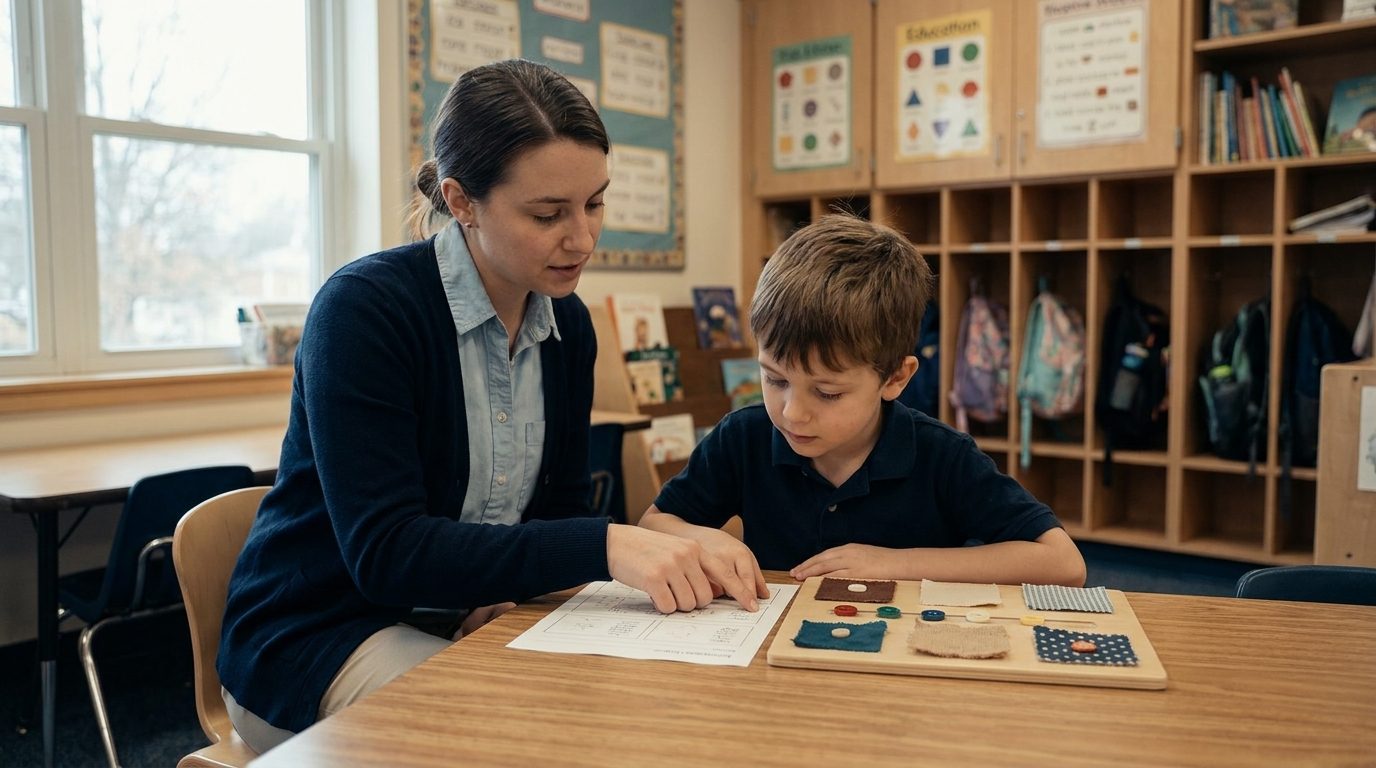
A one-on-one (1:1) aide is assigned to a single student, not a classroom. Where a shared classroom aide splits attention across several students on an as-needed basis, a 1:1 aide’s schedule, training, and daily routine are built around one child’s IEP — the same aide, in the same seat, working the same plan every day. It’s one of several aide types Blue Horizons screens and places across Southern California schools.
1:1 Aide vs. Shared Classroom Aide
A shared classroom aide supports the teacher and moves between several students as the moment requires. A 1:1 aide is dedicated: their IEP-mandated hours belong to one student, and the placement is documented and tracked as such. For a student whose IEP specifies one-to-one support, a shared aide model can leave gaps in coverage — the exact risk a 1:1 placement is designed to close.
When a 1:1 Aide Is Typically Called For
- The IEP team has determined the student requires individualized support beyond what a shared aide can provide
- A student’s behavioral or sensory needs require constant, dedicated supervision throughout the school day
- A student is new to a mainstream classroom setting and needs consistent, hands-on academic or behavioral support to succeed there
- A district or family has experienced a coverage gap under a shared-aide model and the IEP team has escalated to a dedicated placement
Who We Place These Aides With
Public & Private Schools
Special education coordinators whose IEP team has specified one-to-one support and who need a dedicated aide reliably in place, day after day, without depending on whichever classroom aide happens to be available. See our Instructional Aide services for related classroom-based support.
Families
Parents and guardians whose child’s IEP calls for dedicated one-to-one support, and who want to know the same qualified aide will be there for their child every day — not a rotating cast of unfamiliar faces.
Why Continuity of Care Matters
A 1:1 placement only works if the aide is actually consistent. Every Blue Horizons 1:1 placement comes with a named single point of contact from senior management, backed by a 24-hour service center — so a question about the placement never gets routed into an anonymous queue. If an aide is out or a placement needs adjusting, the same point of contact manages the transition, so continuity of care isn’t left to chance.
Our Screening Process
Every aide goes through the Blue Horizons Standard before placement: Screen (DOJ Live Scan fingerprinting and reference checks), Train (structured onboarding plus ongoing retraining), Supervise (multi-layer supervision with a named point of contact), and Verify (real-time attendance and performance tracking feeding our Quarterly Performance Review Program). A 1:1 placement raises the stakes on consistency, so this same standard applies before a dedicated aide ever meets their assigned student.
Frequently Asked Questions
Is a 1:1 aide the same as a shadow aide?
The terms describe the same dedicated, single-student model — an aide assigned to one student rather than shared across a classroom. Contact our 24-hour service center to talk through what your IEP specifies.
Who do we contact if there’s an issue with our assigned aide?
Every placement includes a named single point of contact from senior management, backed by our 24-hour customer service center — not a rotating call center queue. Reach out to our team any time.