
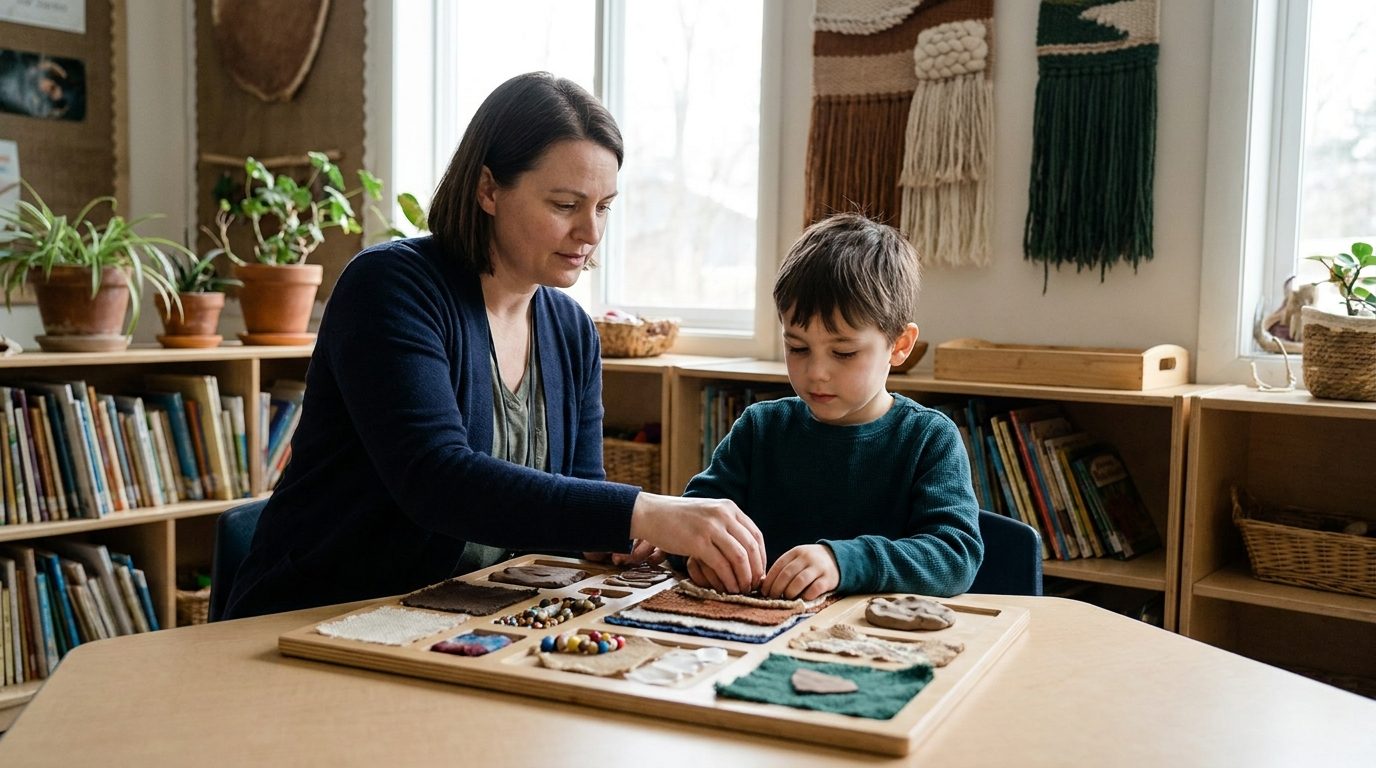
Sensory processing disorder affects how a student’s nervous system takes in and responds to sound, light, touch, movement, and other everyday input — and it can show up very differently from one student to the next, and from one classroom to the next. This page is a general, educational overview of what that can look like in a classroom setting broadly, and the environmental and routine strategies schools often use to support it. It isn’t clinical or diagnostic guidance, and it isn’t a substitute for any individual student’s IEP, 504 plan, or occupational therapy evaluation — those decisions belong with the student’s IEP team and treating professionals.
What Sensory Processing Disorder Can Look Like in a Classroom Setting
Across the classrooms Blue Horizons works in, teachers and staff describe a range of patterns when a student is struggling with sensory input during the school day:
- Strong reactions to noise, bright or fluorescent lighting, crowded hallways, or unexpected touch
- Trouble resettling into instruction after a transition — recess, an assembly, a fire drill, or an unplanned change to the schedule
- Seeking movement, pressure, or fidgeting to stay regulated, which can look like “off-task” behavior to someone unfamiliar with the student
- Avoidance of certain textures, materials, foods, or classroom activities that don’t register the same way for other students
- A pattern of appearing to manage most of the day, then becoming overwhelmed once the cumulative sensory load builds up
None of these signs point to a single cause or a single fix — they’re simply common patterns worth a classroom team’s attention, and worth raising with a student’s IEP or 504 team if they haven’t already been addressed in that student’s plan.
Environmental and Routine Strategies for the Classroom
Much of what helps a student with sensory processing needs isn’t specific to that one student — it’s how the classroom itself is set up and run. Schools tend to lean on a few categories of strategy:
Physical Environment
Seating away from high-traffic areas or direct light, noise-reducing options like headphones or a quieter corner, and easy access to movement or sensory tools without singling a student out.
Routines & Transitions
Predictable schedules, advance notice before a change, and visual or verbal cues before transitions — the moments when sensory overload tends to build fastest.
Instructional Pacing
Built-in breaks between demanding tasks, flexibility in how directions are delivered, and consistency in how the same routine is run day to day.
These are classroom-wide practices — they tend to help a range of students, not only those with a formal sensory processing diagnosis, which is part of why many schools build them into general classroom management rather than treating them as one student’s accommodation alone. For a closer look at how these strategies play out across a single school day for one child, see our guide to sensory processing support at school.
How a Blue Horizons Aide Fits Into That Support
When a student’s IEP or 504 team determines that classroom-wide strategies aren’t enough on their own, a dedicated aide is often the next layer of support. A Blue Horizons Sensory Support Aide works under the direction of the classroom teacher and IEP team to carry out that plan moment to moment — watching for early signs of overload, supporting the use of sensory tools and breaks, and helping a student through transitions — rather than replacing the classroom-level environment and routine work described above.
The Blue Horizons Standard
Whether the setting is a district program, a charter, a private school, or a non-public school, every Blue Horizons aide goes through the same standard before and during placement:
- Screen — DOJ Live Scan fingerprinting and reference checks completed before an aide ever enters a classroom.
- Train — structured onboarding plus ongoing retraining, not a one-time orientation.
- Supervise — multi-layer supervision with a named single point of contact from senior management, backed by a 24-hour service center.
- Verify — real-time attendance, timesheet, and journal tracking feeding our Quarterly Performance Review Program, so schools and families get auditable follow-through, not just a promise.
Blue Horizons Sensory Support Aide has been a game-changer for our son’s sensory processing needs, resulting in a much improved school experience.
Mary S., Parent
A Note for Parents and School Teams
This page is meant as a general educational overview for parents and school staff thinking through what classroom-level support for sensory processing needs can look like — it isn’t medical or diagnostic guidance, and it isn’t a substitute for the assessments, goals, and plans developed by a student’s IEP team, therapists, or physicians. If you’re weighing whether a dedicated aide is the right next step, our team is glad to talk it through. Contact Blue Horizons or visit our homepage to learn more about how we place and support aides across Southern California.