
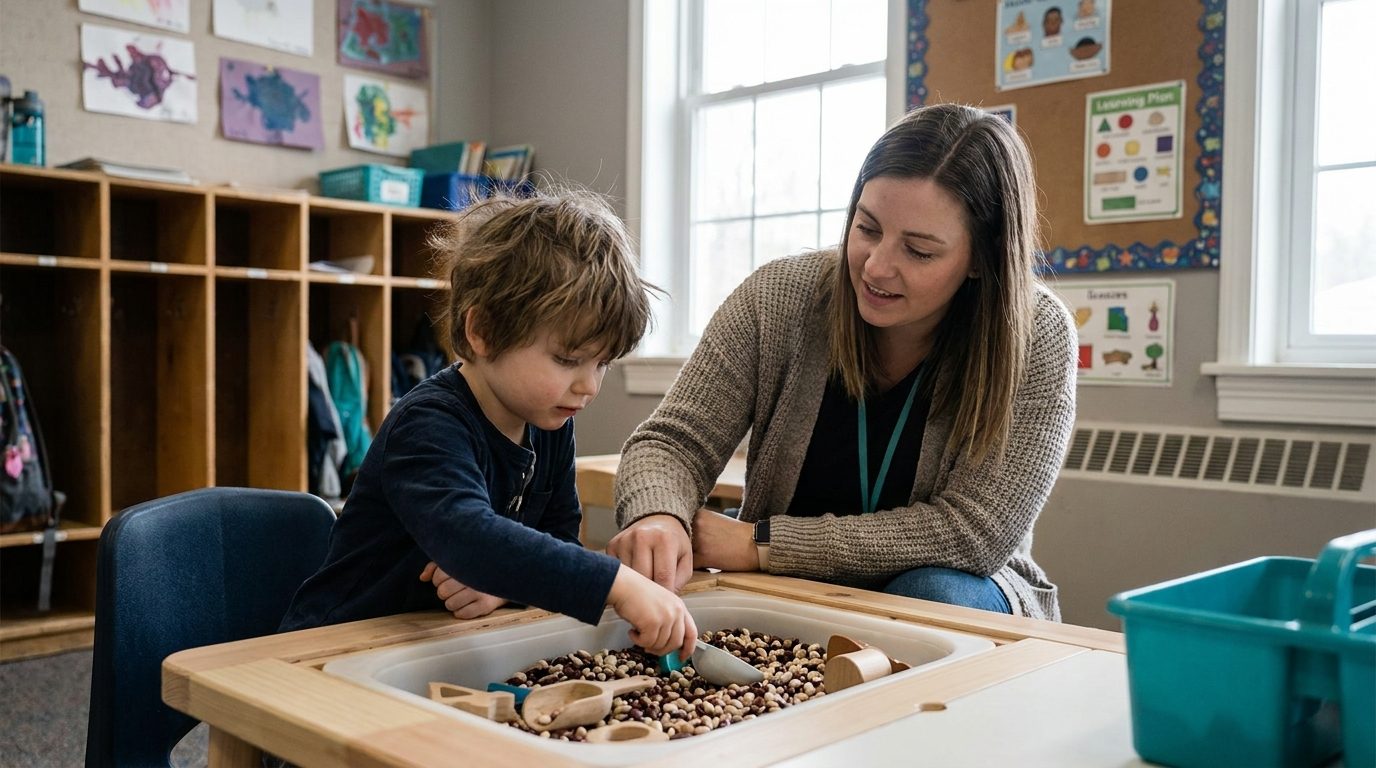
Every student with autism spectrum disorder is different, and there’s no single formula for what support in the classroom should look like. But across the SPED classrooms Blue Horizons works in every day, a few elements tend to show up again and again: structured routines, clear communication supports, thoughtful attention to sensory needs, and consistent behavioral expectations from the adults in the room. This page is a general, educational overview of those elements — not clinical or diagnostic guidance. Decisions about any individual student’s supports should always come from that student’s IEP team.
What Classroom Support Often Looks Like
Classrooms that support students with autism well tend to build around a few shared practices, regardless of grade level or setting:
- Structured routines — predictable schedules, visual schedules or checklists, and advance notice of transitions so a student knows what’s coming next.
- Communication support — reinforcing directions in the format a student best understands, whether that’s visual supports, simplified language, or an assistive communication tool, and giving processing time before expecting a response.
- Sensory considerations — awareness of things like noise level, lighting, seating, and access to movement or quiet breaks, so the environment doesn’t work against the student’s ability to focus.
- Behavioral consistency — the same expectations and the same responses to those expectations, applied the same way day to day, so a student can predict how the classroom works.
None of this replaces a student’s IEP goals or any behavior or communication plan already in place — it’s the day-to-day scaffolding that helps those plans actually work in a real classroom.
How a Blue Horizons Aide Fits Into That Support
This is where a Blue Horizons Autism Support Aide fits in. Working under the direction of the classroom teacher and the student’s IEP team, an aide is often the person maintaining the routine day to day — running the visual schedule, cueing transitions, reinforcing communication supports, and applying behavioral expectations the same way every day so the student experiences consistency even when the classroom around them is busy or changing.
Depending on what the IEP team has identified, that support might come from an aide with an instructional focus, a behavioral focus, or a sensory focus — Blue Horizons places Instructional, Behavioral, and Sensory aides, matched to what a student’s plan actually calls for rather than a one-size-fits-all placement. For families thinking about sensory needs specifically, our guide to sensory processing support at school covers that piece in more depth.
The Blue Horizons Standard
Whether the school placing the aide is a district program, a charter, a private school, or a non-public school, every Blue Horizons aide goes through the same standard before and during placement:
- Screen — DOJ Live Scan fingerprinting and reference checks completed before an aide ever enters a classroom.
- Train — structured onboarding plus ongoing retraining, not a one-time orientation.
- Supervise — multi-layer supervision with a named single point of contact from senior management, backed by a 24-hour service center.
- Verify — real-time attendance, timesheet, and journal tracking feeding our Quarterly Performance Review Program, so schools and families get auditable follow-through, not just a promise.
Blue Horizons Sensory Support Aide has been a game-changer for our son’s sensory processing needs, resulting in a much improved school experience.
Mary S., Parent
A Note for Parents and School Teams
This page is meant as a general educational overview for parents and school staff thinking through what classroom support can look like — it isn’t medical or diagnostic guidance, and it isn’t a substitute for the assessments, goals, and plans developed by a student’s IEP team, therapists, or physicians. If your school or family is weighing whether an aide is the right piece of that plan, our team is glad to talk through what a placement could look like. Contact Blue Horizons or visit our homepage to learn more about how we place and support aides across Southern California.