
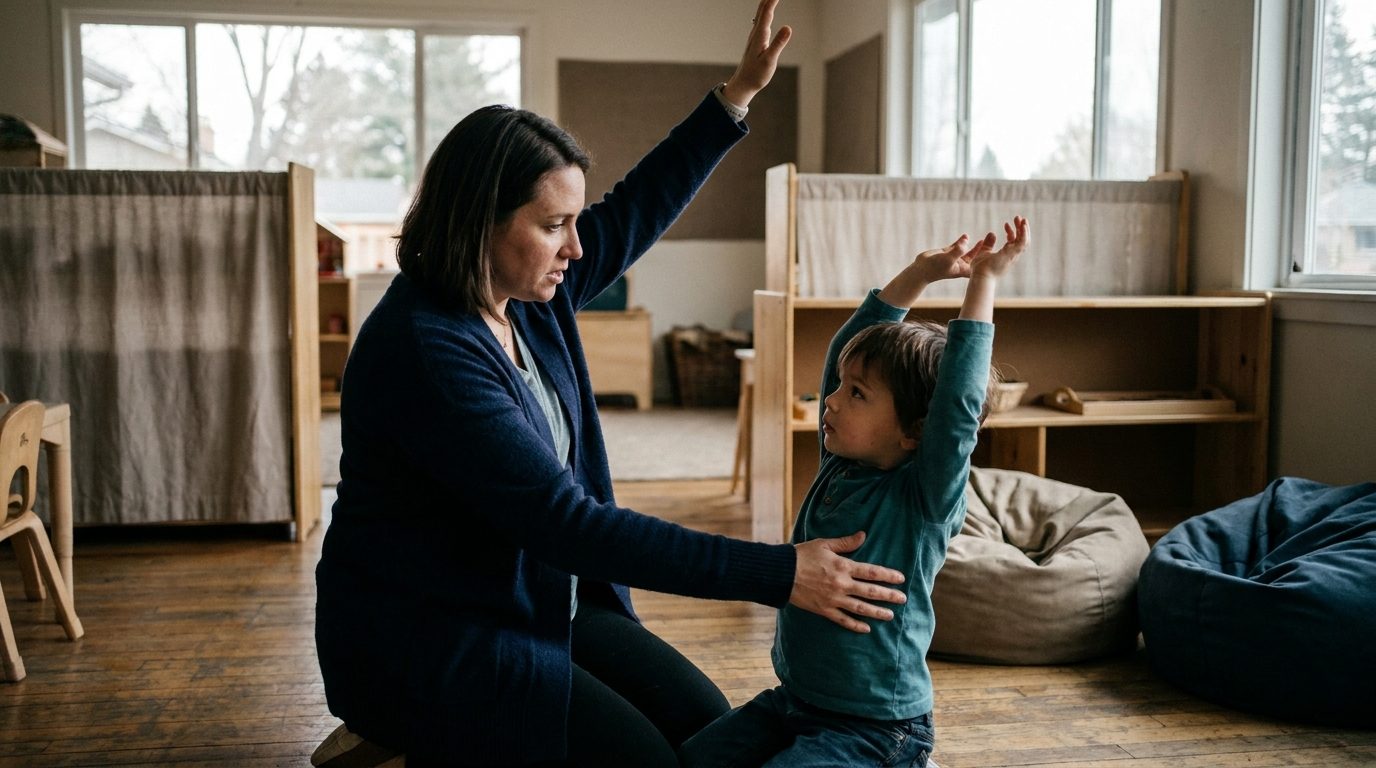
A student with a physical disability may need support moving safely around the classroom and school campus, reaching and using shared materials, and taking part in activities alongside classmates. This page is a general educational overview, not medical or therapeutic advice — the specific supports any student receives are always set by their IEP team, physicians, and therapists, and carried out under the direction of the classroom teacher.
What Classroom Support Can Include
- Mobility assistance — helping a student move between classroom areas, transition between activities, or navigate hallways, stairs, and shared spaces, following the guidance already set by the student’s IEP team and therapists
- Classroom access and participation — positioning materials within reach, adapting how a student engages with an assignment or activity, and helping a student take part in group work, PE, or field trips alongside peers
- Safety awareness — watching for hazards in shared spaces, supporting safe use of any mobility equipment during the school day, and following the school’s established emergency and evacuation procedures for that student
None of this is decided by the aide. Every accommodation, transfer technique, and safety procedure comes from the student’s IEP, 504 plan, or a directive from a physician, physical therapist, or occupational therapist — the aide’s role is to carry out that plan consistently, day after day, under the classroom teacher’s supervision.
How a Blue Horizons Instructional Aide Supports This
For School Staff
A Blue Horizons Instructional Aide works inside the classroom under the teacher’s direction, following the exact procedures the IEP team and any treating therapists have set for mobility, access, and safety — and documenting attendance and progress along the way, so your program has a consistent record, not a gap.
For Families
You want to know the person supporting your child day to day is qualified, consistent, and closely supervised — not a rotating cast of strangers. See what to expect from a Blue Horizons aide for more on how placements and communication work.
The Blue Horizons Standard
Every aide we place — including those supporting students with physical disabilities — goes through the same standard before and during placement: Screen (DOJ Live Scan fingerprinting and reference checks), Train (structured onboarding plus ongoing retraining), Supervise (a multi-layer supervision model with a named single point of contact from senior management, backed by a 24-hour service center), and Verify (real-time attendance and performance tracking that feeds our Quarterly Performance Review Program).
Frequently Asked Questions
Does an instructional aide provide medical care or physical therapy?
No. This page is general educational information, not medical advice. An aide follows the specific plan already established by the student’s IEP team, physicians, and therapists — they do not diagnose, treat, or make medical decisions.
Who decides exactly what support my child or student receives?
The IEP team, in coordination with the school, family, and any treating physicians or therapists. The aide’s job is consistent, well-supervised follow-through on that plan under the classroom teacher’s direction.
How do we request an aide for a student with a physical disability?
Reach out through our contact page and our 24-hour service center will help match a screened, trained aide to the student’s IEP-directed needs.